Go on any developer forum right now and someone's probably writing Angular's obituary. They've been writing it for four years. Angular keeps shipping updates anyway.
Look past the takes and check where the actual work is happening. Enterprise teams are still building on it. Hiring for it. Betting multi-year roadmaps on it. That doesn't happen with dying technology.
So the question isn't really whether Angular is alive. It's whether it's the right call for what you're building. Here's an honest take on that on the angular web development.
Angular came out of Google. It's open source, it's written in TypeScript, and it's also a proper platform and not a view layer. Forms, routing, http and dependency injection are all out of the box. testing. Nothing that you need to bolt up in later.
Worth knowing: the Angular that we are using today has nothing to do with the original AngularJS (2010). Google ended that completely, and rebuilt from the ground up, in 2016. Different architecture, different approach, different everything. Angular 2+ is what the motivation behind that, it's what's running in production at companies like Deutsche Bank, Paypal and Microsoft right now.
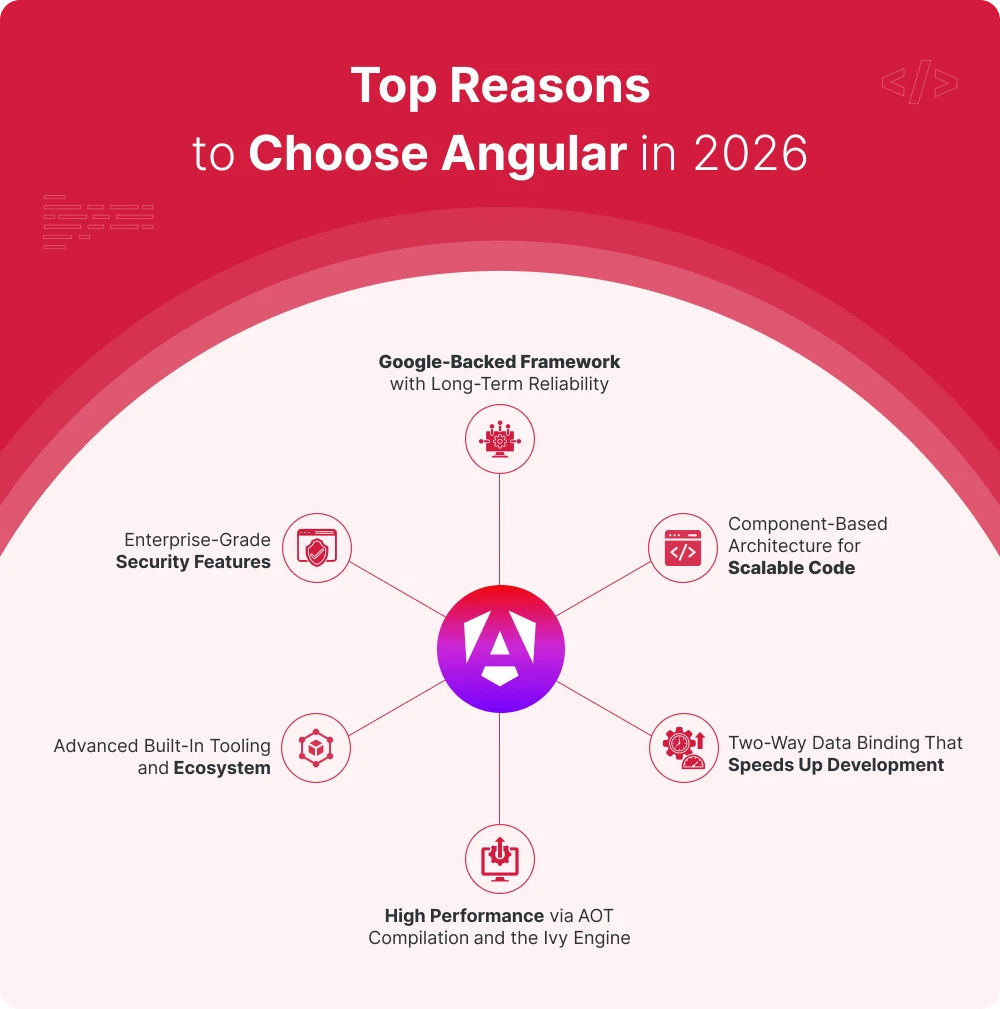
Not all frameworks are built for the long haul. Here are the real reasons why angular web development keeps earning its spot on serious engineering teams in 2026.
Pick any open-source framework and ask yourself: who's maintaining this in four years?
With Angular, that answer is a dedicated Google engineering team. Updates ship on a fixed schedule. Security patches come through quickly. The roadmap is public so you can see what's coming. For a company committing real resources to a product, that kind of predictability is worth a lot more than people tend to admit when they're chasing newer options.
Angular breaks applications into components. Each component has its own logic, their own template, their own styles. Nothing spills over to the rest of the application by accident.
With a team of only a few people this may seem like a lot of ceremony. Fine. But when you've got twelve engineers shipping features at the same time cold hands is what you end up having to get out of there .the codebase turns into a disaster.
Two-way data binding ensures that the UI and the data model are always in symphony without the need for you to add lines of code for the same.
User modifies a form field, model gets updated. Data changes on the backend, the screen reflects it. No manual DOM manipulation sitting in between, no event listeners scattered everywhere handling sync logic.
Angular compiles your templates before the browser loads anything. That's Ahead-of-Time compilation doing its job. The browser gets optimized JavaScript from the start instead of doing compilation work at runtime.
The Ivy rendering engine has been in place and getting refined for several years now. Bundle sizes are smaller. Debugging is more straightforward. Tree shaking strips out unused code automatically at build time.
Angular CLI is one of those tools developers stop noticing after a while because it just handles things. Creating components, scaffolding new projects, running optimized builds, managing different environments. One tool, consistent behavior, no configuration headaches.
RxJS comes integrated natively. If the application in question is dealing with live data feeds, API streams or WebSocket connections, to have RxJS baked in versus tacked on makes quite a real difference in the way that logic gets written.
XSS protection isn't something developers have to remember to add. It's built into how the framework handles data by default.
Content Security Policy support is included. For applications in healthcare, financial services, legal tech, anywhere personal or financial data is involved, security at the framework level matters.
The angular web development reveals itself in any industry where the downtime and data errors have consequences.
Healthcare platforms for handling patient records, appointments and tele health services. Banking and finance applications that run real-time transaction dashboards that have strict authentication requirements.
E-Commerce Platforms handling High Traffic, Dynamic Inventory, and complicated cart recovery. SaaS products that need to grow their feature set without the architecture becoming unmanageable six months in.
React is a library. Angular is a framework. That distinction sounds minor but it shapes the entire development experience.
Angular gives you a structure that the whole team follows. When a project grows and the team expands, that enforced consistency becomes useful rather than limiting.
Larger teams, longer timelines, more complex requirements on the table. That's where Angular tends to be the stronger choice over React or other lighter options.

Finding a good angular js development company takes more than reading a website. Look for documented case studies on projects close to yours in scope and industry.
Dig into the specifics. A team that has JavaScript experience but limited Angular depth will cost you time later. Check references from past clients and actually follow up on them.
Working with the right angular development company from the start prevents expensive rework and architectural mistakes that compound over time.
Angular is not the answer for every project. Quick MVPs with a two-person team and a tight deadline might be better served elsewhere.
But for teams building products that need to scale, that multiple engineers will maintain over years, where security and performance actually have business consequences, Angular is a proven and practical choice.
Talking to a knowledgeable angular development company before making your decision stick is worthwhile taking the time. Lay down and know the requirements, the tradeoffs and make the call from there.

Listen to this podcast to understand why the Angular web development framework continues to power large scale applications. We discuss its scalability, security, and why many engineering teams still rely on Angular for enterprise web development in 2026.

Talk to certified experts at VT Netzwelt and know if Angular will work as a platform for your project. Get a straight answer no sales pitch just real guidance that gets built around your requirements.
Angular is a full platform that includes routing, testing, handling of http and forms. TypeScript identifies the problems from the early stages and then keeps the large codebases predictable.
It’s one of the better options for enterprise work precisely because of the enforced structure. Large teams can be working in parallel without the possibility of the codebase deteriorating.
Yes. React is more of an early stage product that is fast moving. Angular is more suitable according to the larger team size, a complex application, and easier to maintain over the years.
Healthcare Portals, Banking Dashboards, Software as a Service, E-commerce Store Fronts, Enterprise Management, Data Real-Time Applications. Anything where reliability and the power to keep the code around for a long time are requirements.
It is being funded and maintained by Google and has a public road map. There is mature and well-documented tooling. The developer community is large enough that it is not a stretch to find experienced engineers.

Are You Prepared for Digital Transformation?
ReactJS Development
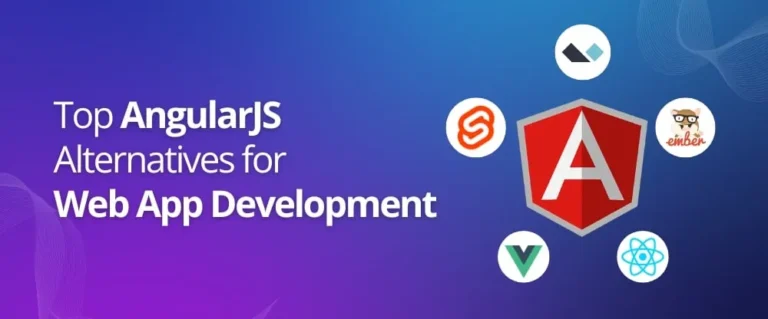
Planning to move beyond AngularJS? Explore the 5 best AngularJS alternatives in 2026 with migration strategies, performance insights, and learning curves.
ReactJS Development
Node.js vs React.js comparison for 2026 web apps covering performance, scalability, frontend vs backend roles, and ideal business use cases.
Java Development
Discover the 7 best Java frameworks for web app development. Build scalable, modern applications with tools like Spring Boot, Quarkus & more.